
WhatsApp's Signal Protocol integration is now complete
moxie0 on 05 Apr 2016
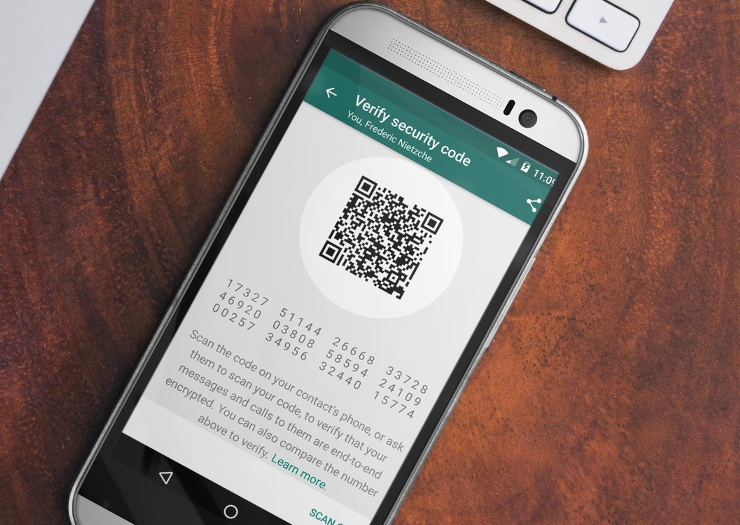
At Open Whisper Systems, our goal is to make private communication simple. A year ago, we announced a partnership with WhatsApp and committed to integrating the Signal Protocol into their product, moving towards full end-to-end encryption for all of their users by default.
Over the past year, we’ve been progressively rolling out Signal Protocol support for all WhatsApp communication across all WhatsApp clients. This includes chats, group chats, attachments, voice notes, and voice calls across Android, iPhone, Windows Phone, Nokia S40, Nokia S60, Blackberry, and BB10.
As of today, the integration is fully complete. Users running the most recent versions of WhatsApp on any platform now get full end-to-end encryption for every message they send and every WhatsApp call they make when communicating with each other. This includes all the benefits of the Signal Protocol – a modern, open source, forward secure, strong encryption protocol for asynchronous messaging systems, designed to make end-to-end encrypted messaging as seamless as possible.
Reproducible Signal builds for Android
moxie0 on 31 Mar 2016
As of our latest Android release, Signal builds are reproducible. Reproducible builds help to verify that the source code in our GitHub repository is the exact source code used to build the compiled Signal APK being distributed through Google Play.
Signal on the outside, Signal on the inside
moxie0 on 30 Mar 2016
A few months ago we completed the process of unifying all of our apps across Android, iOS, and the Desktop under the name ‘Signal.’ This simplified the language around our apps and eliminated a lot of confusion. Now we’re doing the same thing “inside” our apps by renaming Axolotl to Signal Protocol.
Axolotl has been the name of the cryptographic protocol that our apps use for end-to-end encryption, but it’s not the easiest word to pronounce. Sometimes people use ‘Axolotl’ to refer to just the base double ratchet instead of the full messaging protocol, so there has also been some confusion around what people mean when they say ‘Axolotl.’
To continue eliminating confusion and simplifying everything within the Signal ecosystem, we’re renaming Axolotl to Signal Protocol. The implementations have been renamed, so there are open source Signal Protocol libraries available for C, Objective C, Java, and JavaScript in our GitHub repository, as before. These have been making their way into an increasing number of communication apps, and we’re excited for the future of the Signal Protocol as it continues to spread.
Signal Desktop
moxie0 on 02 Dec 2015
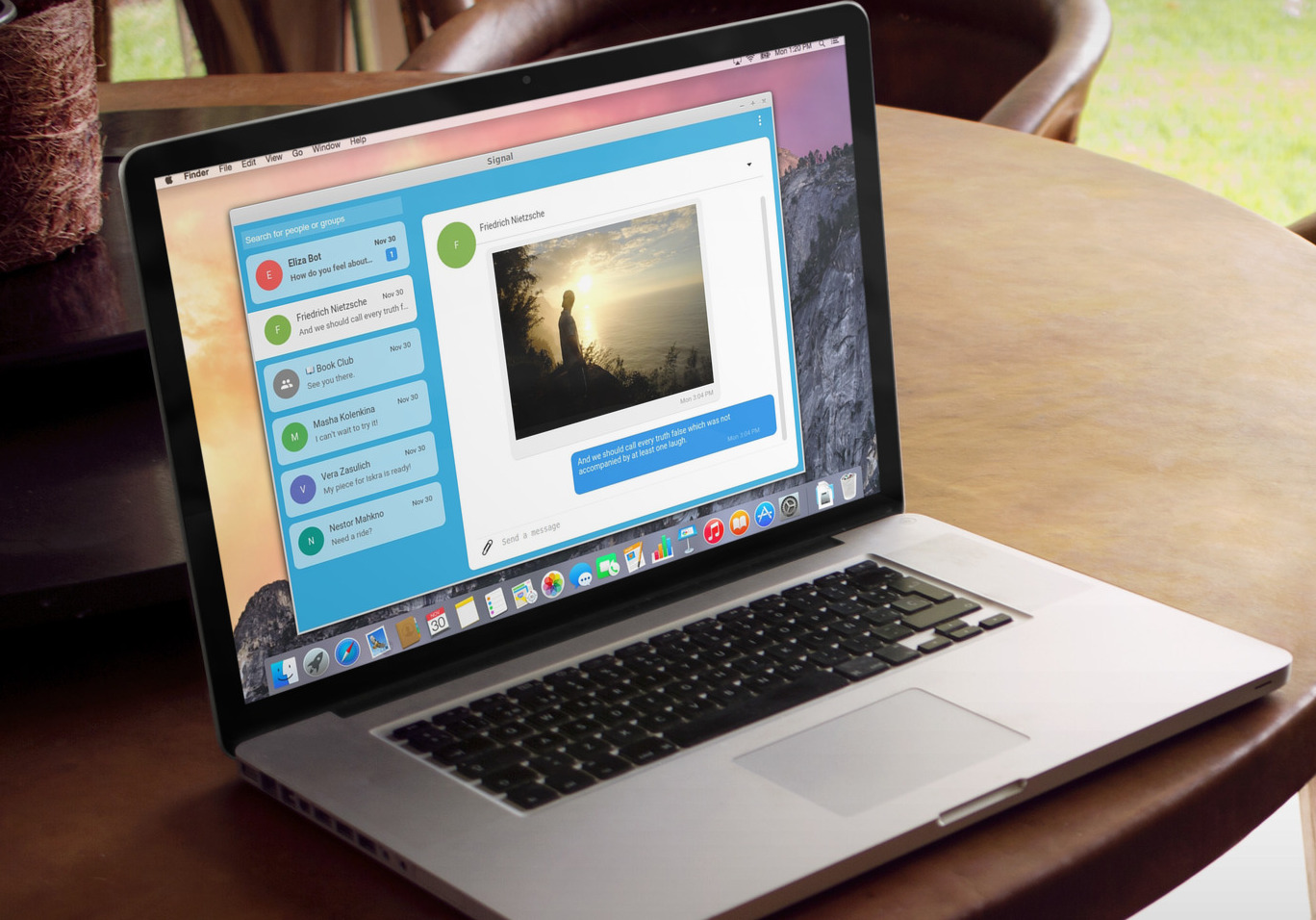
Today we’re making the Signal Desktop beta available. Signal Desktop brings the trusted private messaging experience of Signal to the desktop, with a simplicity that allows you to seamlessly continue conversations back and forth between your mobile device and your desktop computer.
Just Signal
moxie0 on 02 Nov 2015
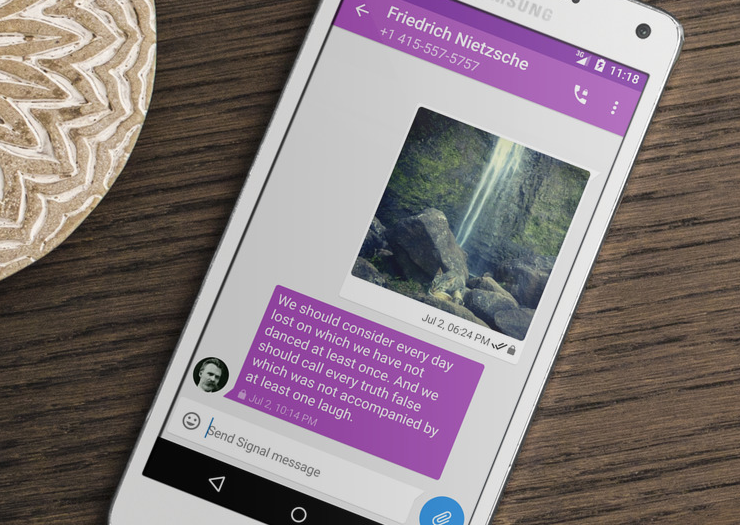

Today we’ve started rolling out Signal for Android, which unites simple private messaging and simple private calling into a single app on Android. This is the culmination of our effort to combine TextSecure and RedPhone into one app, which we began on iPhone and are now bringing to completion on Android.

No Risk No Reward
riyapenn on 18 Aug 2015
After immersing myself for years and years in the world of finance (specifically, options market making and algorithmic trading), there was no escaping this mantra of “no risk, no reward.” Most of the time, my (trading) style was fairly risk-averse. I knew how to find the signals of opportunities among the daily noise to reap small rewards. Fortunately, I also learned how to think about the outliers and to take the occasional big but calculated risks.
Saying goodbye to encrypted SMS/MMS
moxie0 on 06 Mar 2015
It’s 2015, and the end of the road for encrypted SMS/MMS in TextSecure.
The TextSecure story started back in 2009, at the dawn of the smartphone era. Back then, TextSecure focused on securing the transport that everyone coming from feature phones was familiar with: SMS. Today, many things have changed, and TextSecure now emphasizes the “TextSecure transport,” which uses data rather than SMS. While we remain committed to supporting plaintext SMS/MMS in addition to the encrypted TextSecure transport so that the app can function as a unified messenger, we are beginning the process of phasing out support for SMS/MMS as an encrypted transport in favor of the TextSecure data protocol.
Signal 2.0: Private messaging comes to the iPhone
moxie0 on 02 Mar 2015
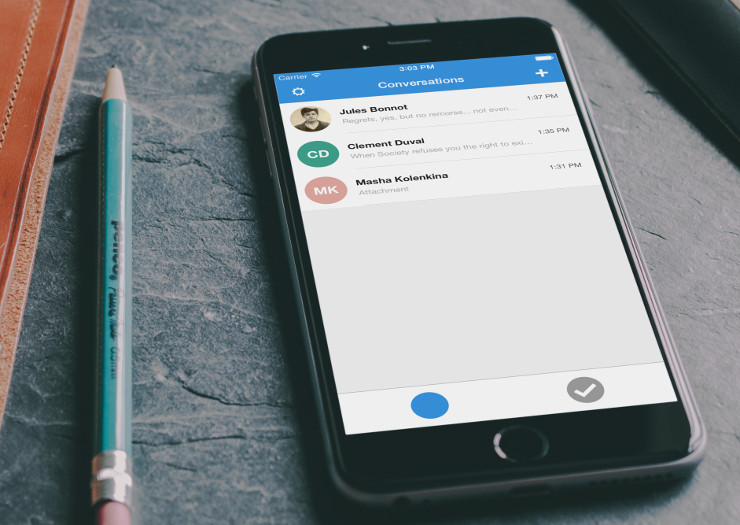

Today we’re releasing Signal 2.0, with support for TextSecure private messaging.
It is now possible to send end-to-end encrypted group, text, picture, and video messages between Signal on iPhone and TextSecure on Android, all without SMS and MMS fees. Signal 2.0 blends private phone calls and private messaging into a single frictionless interface, allowing you to focus on what’s important by quickly organizing your conversations using an inbox/archive work flow.

Beyond the Grunts and Clicks: An Exploration into Doing Things the Hard Way
A guest post by greggawatt on 31 Jan 2015
Winter Break Of Code Day Nineteen

I recently had the opportunity to listen to another amazing podcast from 99% Invisible, a program about “design, architecture and the 99% invisible activity that shapes our world.” It got me thinking about how my world is shaped by the way I engage with computers. The podcast is a story about a computer scientist named Doug Engelbart who was, in essence, a crazy brilliant genius. He thought of ways to change how we interacted with computers and, most famously, was the inventor of the computer mouse. He also invented a specialized companion device to the mouse that worked like the one-hand equivalent of a keyboard.

Paddle Out
A guest post by lconnolly on 30 Jan 2015
Winter Break Of Code Day Eighteen

Late this afternoon I took a break from working to surf. The sun was setting and a cool breeze was picking up as grey clouds billowed behind the mountains along Hanalei Bay. I had spent most of the day wrangling content, markup, and CSS, and the Pacific was calling. There was still plenty of work to be done, but balance is important, and my mind needed to reset. Surfing would be today’s lesson.