
Simplifying OTR deniability.
moxie0 on 27 Jul 2013
At Open Whisper Systems we help develop TextSecure, an encrypted chat application for Android. TextSecure was designed as a general purpose SMS/MMS client which would also automatically encrypt conversations when communicating with other TextSecure users. For those encrypted sessions, TextSecure uses a compact derivative of the well-known OTR protocol.
We’re currently in the process of transitioning TextSecure to use a device’s data channel as a transport for communication with other TextSecure users whenever possible. This enables communication with the upcoming TextSecure for iOS, helps users avoid SMS fees, and obscures conversation metadata from telcos.
The transition to a new transport is also a good opportunity for us to evaluate and introduce additional cryptographic protocol changes. Below is one cryptographic protocol change we’re thinking of making that we’d welcome feedback on.
Open Whisper Systems is coming to iPhone!
moxie0 on 25 Jul 2013
Open Whisper Systems is a project focused on developing Open Source security and privacy apps for the mobile environment. With all of the recent discussion about PRISM, Boundless Informant, and FISA orders, there has been a surge of new users and inquiries about how to get involved.
SBoC Farewell
moxie0 on 31 Mar 2013
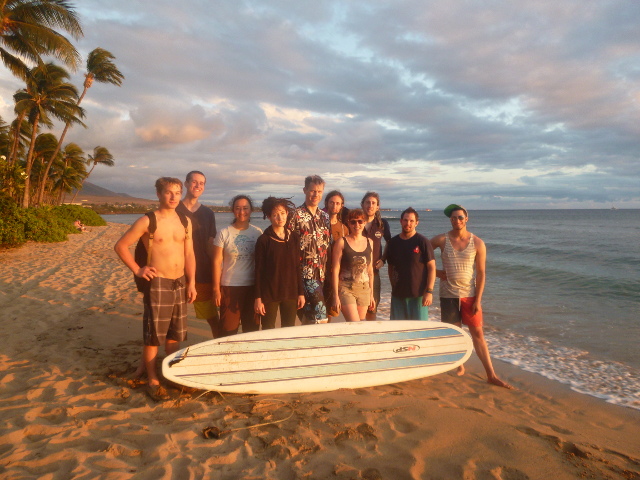
The last code committed, the final waves surfed in to the shore, the closing sunset of Spring Break Of Code.

Call Quality Metrics
emblem on 30 Mar 2013
Spring Break Of Code, Day Six
Because secure systems aren’t valuable if they’re not used, Whisper Systems has always focused on delivering strong cryptography alongside a great user experience. That’s the reason call quality has always been a priority in RedPhone’s development.
We know that, for many users, RedPhone has consistently delivered a call quality experience comparable to commercial mobile VoIP solutions. But we also hear from users who report problems like dropped calls, distracting levels of echo and latency, or inaudibly low in-call volume. While we investigate these reports and attempt to resolve them, we don’t have a clear view of what situations cause RedPhone’s call quality to degrade, or how to prioritize our development efforts.

All The Things That Pull And Push
A guest post by abolishme on 29 Mar 2013
Spring Break Of Code, Day Five

I know very well that each and every crisis of modernity is concentrating, concatenating, and seating more deeply into everyday life. I know the struggles of the world’s unseen and unheard are being subsumed – appropriated – under and into the framework of a liberal democracy, leaving those at the periphery still under the yoke of capital. The Right further entrenches itself into political discourse, both in the United States, and (more extremely) abroad (Finland, Greece, … et al.). The Left is no less problematic: reiterating the petty values of social democracy, negotiating the terms of our entrapment within capitalism. Every season, new horrors fall from the clouds and rise from the seas as industrial civilization demonstrates that terraforming can also work in reverse. The world’s genetic library – the most prime commons, if ever one existed – is rapidly contracting via extinction, privatization, and engineering. The colossal failure of ideology in the twentieth century has left the radicals of today no other choice but to see themselves as “post-ideological”. This is a deeply concerning conundrum, as ideology survives in post-ideology, different only to the extent that it is less apparent. Yes, it seems like we are living in end times – an entire era of Apocalypse – made only more insidious by our optimism in its shadow.

Spring Break Of Code, Day Four
The main sound on top of the ocean is the click clack of laptop keys, and the jangle of test calls and SMSes. A neighbor stopped by to comment that we must be the next Facebook, the next Google; working instead of surfing made sense in his mind only in the land of money at the end of the tunnel. He loaned us his stand up paddle boards, surely expecting a return on investment 10 fold down the line when we exited into the sunset. A journalist visiting Open Whisper Systems’ Spring Break of Code commented that she expected more philosophy, politics, and conversation. After all this group is composed of people who are not only technologists, but also open source evangelists, activists, and humanists. Lilia went over some of the why, but practically anyone could see we were concentrating on the how, and in the frenzied silence it was clear that a common philosophy was assumed and what bound us here was the challenges in the technology to power that philosophy.

Streamlining TextSecure Settings
A guest post by liliakai on 27 Mar 2013
Spring Break Of Code, Day Three
I am no stranger to Hawaii. Although I’ve never lived here myself, I’ve visited the islands perhaps a dozen times. My grandmother and my father were born and raised here. My mother attended college here. I have aunts, uncles, and cousins who’ve lived on various islands, moved away, came back, moved away and back again. I even have Native Hawaiian blood in my veins.
But this trip is different. This time it’s not about family or heritage. This time, I have a mission: to make secure text messaging and calling easier, more accessible, and more prevalent.

Highly Unconventional Suggested First Aid
A guest post by rhodey on 26 Mar 2013
Spring Break Of Code, Day Two
“I am torn on how best to introduce myself out of context like this, the idea of rattling off facts from my resume is my first instinct, but that seems terribly conventional. With the goal of introducing myself and the entirety of my character, my second (highly unconventional) instinct is to link you to my online dating profile with the prayer that such an action would be taken in the desired context. Through my indecision I hope to explain who I am and why I would like to travel across the country to be involved with the Institute for Disruptive Studies. So here goes…”

Dirigibles, Chinese Junk Rigs, and Surfboards
A guest post by isislovecruft on 25 Mar 2013
Spring Break Of Code, Day One.
One of the first times I met up with Moxie while travelling, we met at a dive bar in San Francisco’s Mission District, packed with hipsters. I had nineteen years, a modified state ID card, and just hitchhiked into town. We sat at the bar, and both ordered well gin and tonics.
I had a proposal, the sort of get-rich-quick scheme it seems that only 18th century pirates and lazy hacker-squatters are capable of contriving: We fly to China. Then, we spend a few grand purchasing a Chinese junk rig, and equip it with a system of pulleys so that we can man the sails from the cockpit, solo if necessary. Next, we fill the cabin with about as much potable water as we can carry and enough dried food to stave off starvation, and set a course across the northern arc of the Pacific – avoiding the treachery of the South Seas – for San Francisco. The choice of vessel was key, the battened sails and flattened hull of a Chinese junk rig make it arguably one of the safest ships to make a transoceanic voyage alone, not to mention the financial incentives: being rare in the Americas, a well-kept junk rig would go for anywhere from $50,000 to $250,000 USD – not to mention grant you free slip fees at just about any marina from Anchorage to Punta Arenas. How could anyone turn down such a preposterous plot which included adventure on the high seas, a high mortality risk, riches and notoriety?